Groundbreaking New Research: Ketogenic Therapy in Treating Weight Normalised Anorexia Nervosa
- Dr Erin Louise Bellamy

- Jun 3
- 3 min read
Of the 22 women enrolled 82% completed the full study. By the end, 72% of completers scored in the recovered range on eating disorder assessments as measured by two validated scales.
In a study published this week in Nature's Communications Medicine, Dr Frank Guido and his team summarise: "This study explored whether a ketogenic diet could be a safe and effective treatment for adults with anorexia nervosa. Participants tolerated the diet well, with no evidence of worsening of symptoms. Instead, participants showed significant improvements in eating disorder symptoms, including reduced dietary restraint, less concern about food and body shape, and improved mood."
What did this study do?
A study investigated the feasibility and safety of a ketogenic dietary therapy in adults with weight normalised anorexia nervosa, finding that the therapy is well-tolerated and demonstrates potential efficacy in reducing core psychiatric symptoms.
The study involved 22 participants, with 18 completing the 14-week trial, and showed significant improvements in eating disorder symptoms, including reduced dietary restraint and improved mood.
By the end of the study, 72% of participants had scores within the normal range for both eating disorder and depression symptoms, suggesting that a therapeutic ketogenic diet may be a safe and promising approach to help reduce core symptoms of anorexia nervosa.
The study aimed to evaluate the feasibility, safety, and effectiveness of ketogenic therapy in adults with anorexia nervosa (AN) who were weight normalised but still experiencing psychiatric symptoms.
By the end of the study, nearly three-quarters of participants had scores within the normal range for both eating disorder and depression symptoms. These findings suggest that ketogenic therapy may be a safe and promising approach to help reduce psychiatric symptoms of anorexia nervosa.
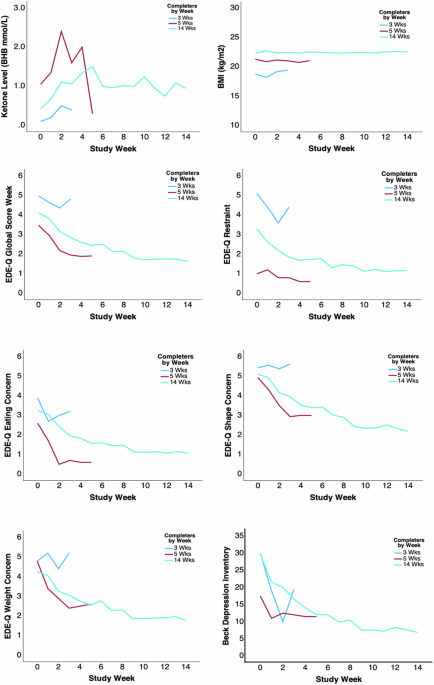
The below graphs, taken from the paper, show how health measures improved for the cohort over the 14 week intervention. Participants reported lower levels of Eating Concern, Shape Concern, Weight Concern and overall Depression scores.

The authors conclude the paper by noting that... "these findings support ketogenic therapy as a promising therapeutic intervention in mildly underweight or weight-normalised anorexia nervosa and warrant testing in a controlled study design... ...Further research is warranted to also evaluate efficacy of ketogenic therapy across populations with eating disorders and to elucidate its neurobiological mechanisms of action."
Overall, the findings suggest that ketogenic therapy with professional guidance may provide psychological benefits for some individuals and could potentially serve as a supportive adjunct approach for improving depressive symptoms.
However, it is important to note that this study was conducted in those who were weight normalised and still experiencing psychiatric symptoms. We should not extrapolate these findings to underweight individuals with anorexia nervosa. Further research is required in this population and these studies are currently underway.
Why is this research important?
It addresses a major unmet need in anorexia nervosa treatment. Current treatments can restore weight, but many people continue to experience intense fear of weight gain, body dissatisfaction, and eating-related anxiety. This study suggests ketogenic therapy may help reduce these core psychiatric symptoms, not just body weight.
It supports the emerging idea that anorexia has important metabolic components. The findings are consistent with newer theories that mechanisms of anorexia nervosa may involve altered brain energy metabolism. This could lead to entirely new treatment approaches focused on metabolic psychiatry.
The improvements were substantial. Participants showed significant reductions in eating disorder symptoms, including restraint, eating concerns, shape concerns, and weight concerns, alongside marked improvements in depression. By the end of the study, 72% of completers had eating disorder and depression scores within the normal range.
The treatment appeared safe for weight normalised individuals. A common concern is that a ketogenic diet might worsen anorexia or lead to further weight loss. Instead, participants generally maintained their weight, no serious adverse events occurred, and symptoms did not worsen.
It opens a new avenue for biological treatment research. There are currently no approved biological treatments specifically for anorexia nervosa. These findings provide preliminary evidence that ketogenic therapy deserves testing in larger randomised controlled trials and could become an important addition to existing psychological and nutritional interventions.
Useful Links
If you’d like, you can visit and read for free, the full open access paper here:
If you want to make sure you are eating the right foods for ketogenic metabolic therapy, you can start here:

At IKRT, we offer a range of programs designed to educate and support you in ketogenic metabolic therapy. If you are interested in learning more, please visit: